
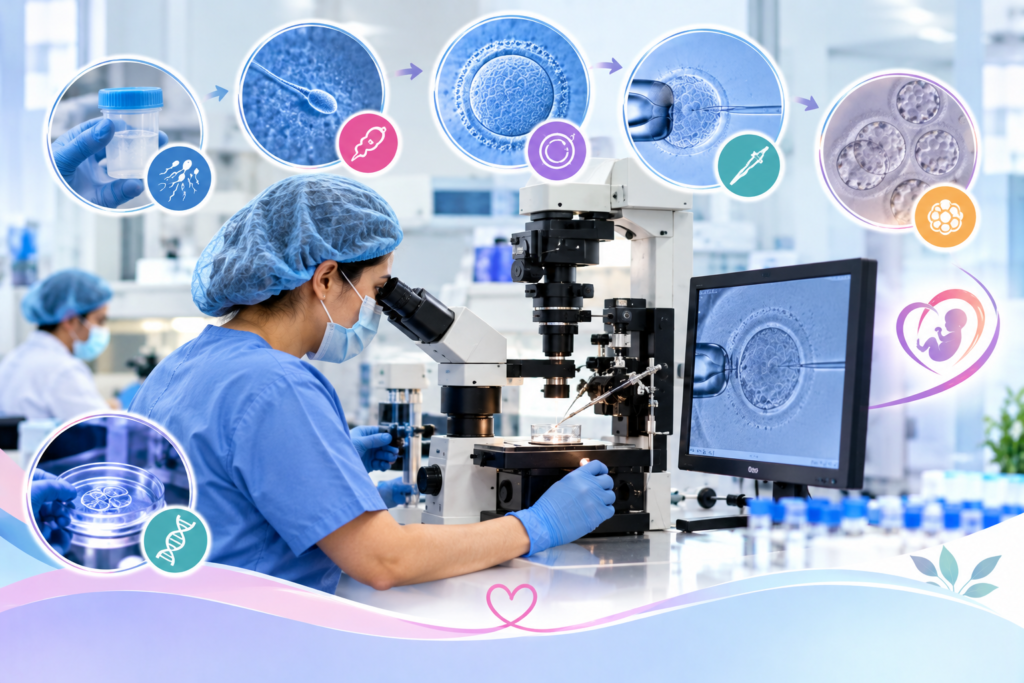
Inside a fertility laboratory, some of the most important moments happen beyond the view of the human eye. With specialized equipment, skilled embryologists, and carefully controlled conditions, a single sperm can be introduced into a mature egg through a procedure known as Intracytoplasmic Sperm Injection (ICSI).
For couples exploring fertility care, understanding this remarkable science can make treatment feel less unfamiliar. At a trusted Fertility Centre in Junagadh, patients can learn how ICSI works, why it may be recommended, and what happens during this specialized stage of IVF.
- The Science Begins With Careful Preparation
ICSI is generally performed as part of an IVF cycle. Before the laboratory procedure, eggs are collected following ovarian stimulation and monitoring. The embryology team identifies mature eggs suitable for injection.
A semen sample is also prepared, allowing the embryologist to examine and select an appropriate sperm.
At a best IVF center in Junagadh, laboratory preparation and careful handling are important parts of the treatment process. Every stage follows established protocols designed to support the eggs, sperm, and developing embryos.
- What Makes ICSI Different?
In conventional IVF, prepared sperm and eggs are placed together in a laboratory dish, allowing fertilization to occur without direct injection.
ICSI takes a more direct approach. Using a specialized microscope and delicate instruments, an embryologist injects one selected sperm into the cytoplasm of a mature egg.
This technique may be considered when certain sperm-related concerns or previous fertilization difficulties are present.
For couples considering ICSI treatment in Junagadh, understanding this difference helps explain why ICSI is a specific fertilization method rather than an entirely separate fertility treatment.

- Precision at the Microscopic Level
The ICSI procedure requires technical skill, steady handling, and close observation. The embryologist works with microscopic equipment to position the egg and carefully introduce the selected sperm.
The process is highly delicate because eggs are sensitive cells, and the injection must be performed with precision.
A best IVF center in Junagadh should have qualified embryology professionals and appropriate laboratory systems to carry out these procedures according to established clinical protocols.
Although technology plays a major role, the expertise of the laboratory team remains an essential part of the process.
- What Happens After the Injection?
ICSI does not end with the injection itself. The laboratory team observes the eggs afterward to assess whether normal fertilization has occurred.
If fertilization takes place, the resulting embryos may be monitored over the following days. Their development is assessed according to laboratory criteria, and the fertility specialist discusses the next steps based on the treatment plan.
At a Fertility Centre in Junagadh, couples can ask how fertilization results are communicated and what they may mean for their individual cycle.
It is important to understand that not every injected egg will fertilize, and not every fertilized egg will develop into an embryo suitable for transfer.
- Is ICSI Necessary for Every IVF Patient?
No. ICSI is not automatically required for every IVF cycle.
The decision depends on factors such as sperm characteristics, previous fertilization outcomes, and the couple’s medical history. For some patients, conventional IVF may be appropriate.
A best IVF center in Junagadh should explain the reason for recommending ICSI, including its potential benefits, limitations, and alternatives.
Choosing ICSI treatment in Junagadh should be based on individualized medical assessment—not simply because the procedure uses advanced technology.
- The Role of Laboratory Standards
Fertility laboratories follow controlled procedures for handling reproductive cells, maintaining equipment, and monitoring environmental conditions. These practices are intended to support consistent and careful laboratory work.
Couples discussing ICSI treatment in Junagadh can ask their fertility team about laboratory processes, embryo monitoring, and how treatment updates are shared.
Clear communication helps patients understand what happens behind the laboratory doors without creating unrealistic expectations about the outcome.
- Understanding Possibilities and Limitations
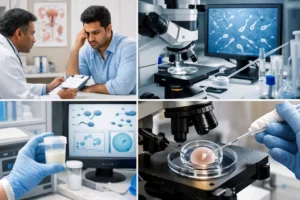
ICSI can assist fertilization in selected circumstances, particularly when certain sperm-related factors are involved. However, it cannot guarantee fertilization, embryo development, pregnancy, or live birth.
Outcomes may depend on age, egg quality, sperm characteristics, embryo development, and other individual factors.
A supportive Fertility Centre in Junagadh will help couples understand these realities while discussing their treatment options with care and transparency.
Where Science Meets the Dream of Parenthood
ICSI demonstrates how advanced reproductive science can address specific challenges during IVF. From selecting a sperm to observing embryo development, the process involves precision, expertise, and careful laboratory work.
At Unique IVF Center, couples can discuss whether ICSI treatment in Junagadh may be appropriate for their fertility needs. A compassionate Fertility Centre in Junagadh should make complex procedures easier to understand, while a best IVF center in Junagadh should support informed decisions with personalized medical guidance.
Inside the laboratory, every step is carefully considered—because behind the science is a deeply personal hope for the future.